
You have no items in your shopping cart.
Water-based lube is the only type compatible with both latex condoms and silicone toys. Silicone stays slippery far longer but degrades silicone toys. Oil-based weakens latex. Desensitizing lubricants mask pain rather than removing its cause, which is why most clinicians advise against them.
Key takeaways
- Water-based is the only universal option. Safe with latex condoms and with silicone toys. It dries fastest and needs reapplying.
- Silicone-based lasts longest and stays put in water, but it degrades silicone toys. Use it with glass, steel or ABS plastic instead.
- Oil-based weakens latex. The CDC advises against oil-based lubricants with latex condoms because they increase breakage risk.
- Osmolality is a real measure, not marketing. The WHO/UNFPA specification sets an ideal of 380 mOsm/kg and an upper limit of 1,200 mOsm/kg.
- The osmolality evidence has limits. High-osmolality lube causes measurable cell damage in laboratory and animal models, but a primate study did not find an increase in actual infection risk.
- Numbing lube removes the warning, not the cause. Pain during sex signals friction, tension or a physical problem. Masking it allows injury to continue unnoticed.
- Glycerin, flavour and warming agents raise osmolality and can cause irritation in people prone to it.
What's on this page
- Why lube type matters more than brand
- What the osmolality research actually shows
- Which lube works with which material
- The desensitizing lubricant question
- Matching lube to the activity
- What we can't confirm
- When to speak to a clinician
- Common myths
- FAQ
- Sources
Why does lube type matter more than brand?
Almost every lubricant on the market falls into three chemical families: water-based, silicone-based and oil-based. The family determines three things that matter more than any brand name — what it is safe to use with, how long it stays slippery, and how it behaves against sensitive tissue.
Brand choice is mostly about scent, thickness and price. Family choice is about whether your condom stays intact and whether your toy survives. Getting the family right solves most problems people blame on the product.
Practical rule: decide the family first based on what else is involved — condom, toy material, water — and only then compare brands within that family.
What does the osmolality research actually show?
Osmolality measures the concentration of dissolved particles in a solution. When a lubricant is far more concentrated than the cells it touches, it draws water out of those cells. In laboratory conditions this causes the surface layer of tissue to dry, shrink and shed.
The WHO/UNFPA specification sets the ideal at 380 mOsm/kg — roughly matching body tissue — and allows an upper limit of 1,200 mOsm/kg as a practical concession, because very few products on the market meet the ideal figure. UNFPA's 2022 procurement guidance Safe Lubricants For All%202022.pdf) uses the same 1,200 mOsm/kg ceiling.
For scale: a 2014 analysis of commercial lubricants found many mainstream products measured well above that ceiling, some several times over, driven largely by glycerin and propylene glycol content.
Here is where most articles overstate the case, so we will not. Cell damage in a dish is not the same as demonstrated harm in people. A macaque study applying a highly osmolar lubricant rectally found acute cytotoxicity — real, measurable damage to the tissue surface — but did not find a resulting increase in SHIV infection risk. The tissue effect is well established. The downstream infection consequence is not.
Practical rule: regard osmolality as a comfort-and-irritation issue with a plausible safety rationale, not as a proven infection risk. If you get irritation from lube, a lower-osmolality product is a reasonable thing to try.
Glycerin is the usual reason a water-based lube reads high. Flavoured and warming products are typically the highest of all, because the sugar alcohols and warming agents are themselves dissolved particles.
Which lube works with which material?
This table is the part worth bookmarking. Compatibility is chemistry, not preference.
| Water-based | Silicone-based | Oil-based | |
|---|---|---|---|
| Latex condoms | Safe | Safe | Not safe — weakens latex |
| Silicone toys | Safe | Not safe — degrades surface | Generally not advised |
| Glass / steel / ABS toys | Safe | Safe | Safe |
| Use in water | Washes away quickly | Stays put | Stays put |
| How long it lasts | Shortest | Longest | Long |
| Reapplication | Often | Rarely | Rarely |
| Cleanup | Rinses off | Needs soap | Needs soap |
| Stains fabric | No | Sometimes | Often |
| Typical osmolality concern | Varies widely by glycerin content | Not applicable | Not applicable |
Water-based
The default recommendation, because it is the only family that is safe with both latex and silicone. The trade-off is that it absorbs and evaporates, so it needs topping up.
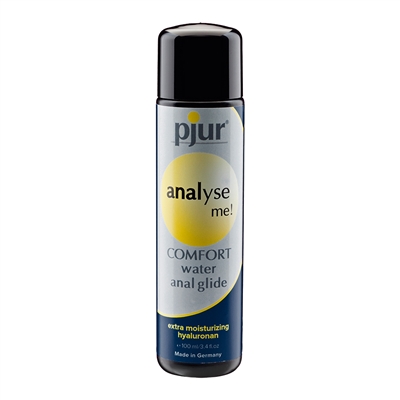
Two we stock: Pjur Analyse Me Comfort Waterbased Anal Glide at $12.99, a thicker cushioning formula, and Colt Slick Personal Lubricant at $18.99 in a 12.85 oz bottle for people who go through it quickly. We reviewed the Pjur formula separately in our Pjur Analyse Me Comfort review.
Silicone-based
Lasts far longer, does not absorb into skin, and works in the shower or bath. The single rule: keep it away from silicone toys. Silicone lubricant and silicone toys are the same polymer family, and prolonged contact makes the toy surface tacky and porous — permanently.
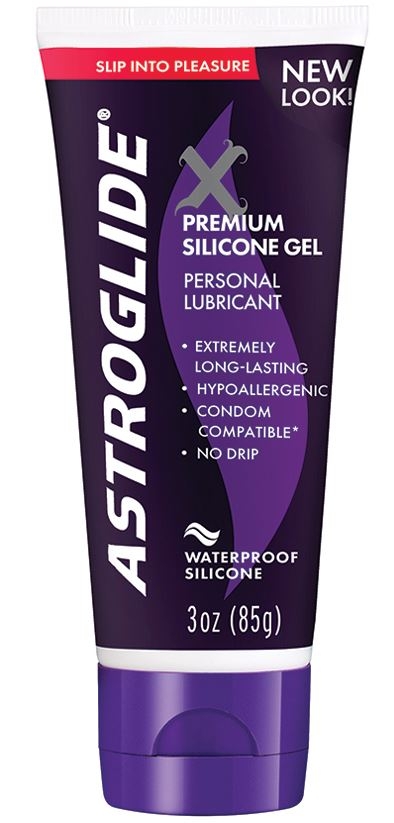
Astroglide Slip Into Pleasure Silicone Gel at $19.99 is the silicone option we stock in gel form.
Buying rule: if you own silicone toys and do not want to track which lube goes with which, buy water-based only. One family, no compatibility decisions.
Oil-based
Long-lasting and good for external massage, but it weakens latex and increases the chance of a condom breaking. The CDC's primary prevention guidance is explicit that only water-based or silicone-based lubricants should be used with latex condoms.
We stock A-Play Extra Thick Anal Glide, oil-based at $20.99. It is a cushioning formula — but if a latex condom is involved, choose a different family.
What about desensitizing and numbing lubricants?
These contain a topical anaesthetic, usually benzocaine or lidocaine, and they are among the most-searched lubricant products we sell. They also carry the clearest downside in this guide, so we want to be direct about it.
Pain during sex is information. It usually means insufficient lubrication, insufficient relaxation, too fast a pace, or a physical issue such as a fissure or haemorrhoid. A numbing agent does not change any of those. It removes your ability to notice them.
The specific concerns:
- Injury continues unnoticed. Without the feedback that would normally make you stop or slow down, tearing can progress further than it otherwise would.
- The numbing is not selective. It reduces pleasurable sensation alongside pain, which is the opposite of what most buyers expect.
- It can transfer. A numbing product applied to one person can numb a partner, or the applying hand.
- Anaesthetic sensitivity is real. Benzocaine allergy is uncommon but well documented.
Practical rule: if you need a numbing product to tolerate an activity, the honest read is that something about the approach needs changing — more lubricant, more time, a smaller size, or a conversation with a clinician. Numbing masks the signal, not the source.
We do stock desensitizing formulas, and we have deliberately not linked them in this guide. That is an editorial decision: we are not going to write a caution and attach a buy button to it. They are findable in the anal lubricants category if you have already decided, ideally after speaking to a clinician.
How do you match lube to the activity?
| Situation | Recommended family | Why |
|---|---|---|
| Latex condoms involved | Water-based or silicone | Oil weakens latex |
| Silicone toys involved | Water-based only | Silicone lube degrades silicone |
| Glass or steel toys | Any | No compatibility conflict |
| In the shower or bath | Silicone | Water-based washes away |
| Anal | Thicker water-based or silicone | Cushioning matters; no natural lubrication |
| Sensitive or irritation-prone | Low-glycerin water-based | Lower osmolality, fewer additives |
| Massage, no condom | Oil-based | Long-lasting, skin-conditioning |
For anal use specifically, the relevant fact is that the rectum produces no lubrication of its own. Whatever you apply is the only lubrication present, which is why quantity and staying power matter more there than anywhere else. Our anal lubricants and water-based categories are organised on exactly this split.
What we can't confirm
Being explicit about the limits of this guide:
- We do not publish osmolality figures per product. Manufacturers rarely disclose them and we have not independently tested our range. We will not estimate a number.
- The infection-risk question is unsettled. As above, tissue damage is documented; a resulting increase in real-world infection risk is not.
- Formulations change. Ingredient lists are revised without notice. Read the label on the bottle you actually receive.
- Individual reactions vary. Glycerin sensitivity, anaesthetic allergy and latex allergy are all individual. Nothing here substitutes for patch-testing a new product.
When should you speak to a clinician?
Contact a healthcare provider rather than reaching for a product if you have:
- Bleeding during or after sex that is more than a trace, or that recurs
- Pain that persists after stopping, or that returns each time
- A tear, lump or swelling that does not settle within a few days
- Any change in bowel or bladder control
- Signs of an allergic reaction — spreading rash, swelling, difficulty breathing
Recurrent pain during sex is a clinical question, not a shopping question. A numbing lubricant is the wrong answer to it.
Common myths
"More expensive lube is safer." Price tracks branding and packaging far more than it tracks osmolality or ingredient quality. Some inexpensive products are well formulated.
"Natural or organic means low osmolality." It does not. Glycerin is plant-derived and is the most common reason a water-based lube reads high.
"Silicone lube is bad for you." There is no good evidence for that. Its real drawback is material incompatibility with silicone toys, not a health effect.
"Saliva works fine." It is a poor lubricant — it dries quickly, has low viscosity, and is not a substitute for a product designed for the purpose.
"Warming and tingling products are just water-based lube with flavour." The active agents are additional dissolved particles, which raises osmolality and is a common cause of irritation.
Frequently asked questions
Can I use silicone lube with a silicone toy?
No. Silicone lubricant degrades the surface of silicone toys, leaving them tacky and porous. Use water-based lube with silicone toys.
Is oil-based lube safe with condoms?
Not with latex condoms — it weakens the material and raises breakage risk. The CDC advises water-based or silicone-based only with latex.
What osmolality should I look for?
The WHO/UNFPA ideal is 380 mOsm/kg with an upper limit of 1,200 mOsm/kg. Most manufacturers do not publish the figure, so lower glycerin content is a practical proxy.
Do desensitizing lubricants work?
They numb tissue, so they reduce sensation including pain. That is the problem: pain during sex is a signal, and masking it allows injury to continue unnoticed.
Why does anal use need more lube?
The rectum produces no lubrication of its own, so whatever you apply is the only lubrication present. Use more than seems necessary and reapply.
Does flavoured lube cause irritation?
It can. Flavouring and warming agents are dissolved particles that raise osmolality, which is a common trigger for people prone to irritation.
Can lube expire?
Yes. Check the date on the bottle and discard products that have separated, changed colour or smell different from new.
Sources and further reading
- WHO/UNFPA specification for personal lubricants (TRS 1025, Annex 11)
- UNFPA — Safe Lubricants For All, procurement specifications (2022)%202022.pdf)
- CDC — STI Treatment Guidelines, Primary Prevention Methods
- Characterization of Commercially Available Vaginal Lubricants: A Safety Perspective
- Rectal Application of a Highly Osmolar Personal Lubricant in a Macaque Model
- Mineral oil lubricants cause rapid deterioration of latex condoms
About this guide
Written by the Gear Isle product team, West Sacramento, CA. Product specifications and prices were verified against our catalogue on 14 August 2026 and are subject to change.
This article is for general information and is not medical advice. Personal lubricants are regulated by the FDA as medical devices. Consult a healthcare provider about pain, bleeding, allergy or any persistent symptom. If you are unsure whether a product suits you, contact us before ordering.


