
You have no items in your shopping cart.
Choose by what else is involved, not by feel. Oil-based products weaken latex condoms. Silicone-based glides damage silicone toys. Water-based is the only option compatible with both, though it absorbs fastest and needs reapplying during a long massage.
Key takeaways
- Compatibility decides this, not texture. Every base feels good. Only one of them works with both condoms and silicone toys.
- Oil weakens latex. If a latex condom is anywhere in the evening, oil is out.
- Silicone glide ruins silicone toys — the same polymer clash covered in our lube guide.
- Water-based is the safe default. It absorbs fastest, which is the trade-off.
- Check oil blends for allergens. One product we stock contains peanut and lanolin oils. That matters more than any performance claim on the label.
- Essential oils are not massage oils. They need diluting into a carrier at roughly 2–5% before they touch skin.
- Massage products are not lubricants unless the label says so. Different testing, different intended use.
What's on this page
- The short answer
- At a glance
- Who should choose water-based?
- Who should choose silicone-based?
- Who should choose an oil?
- What about essential oils?
- Where they are identical
- What we can't confirm
- When should you speak to a clinician?
- Common myths
- FAQ
- Sources
The short answer
Water-based if anything else is involved; silicone if it is purely massage
A water-based glide is the only medium compatible with latex condoms and silicone toys at the same time, so it is the right default when the evening might go further than a massage. If it is purely a back rub with no condoms and no toys, a silicone-based glide lasts far longer without reapplying. Use a true oil only when nothing latex will be involved, and check the ingredients for allergens first.
At a glance
| Water-based glide | Silicone-based glide | Oil / lotion | |
|---|---|---|---|
| Latex condoms | Safe | Safe | Not safe — weakens latex |
| Silicone toys | Safe | Not safe — degrades surface | Generally not advised |
| Glass / steel toys | Safe | Safe | Safe |
| How long before reapplying | Shortest | Longest | Long |
| Absorbs into skin | Yes | No | Yes |
| Washes off | Rinses | Needs soap | Needs soap |
| Stains bedding | Rarely | Sometimes | Often |
| Doubles as a lubricant | Usually | Usually | Check the label |
| Common allergen risk | Low | Low | Nut, lanolin, fragrance |
| Example in stock | Jo All-In-One Cucumber, $7.49 | Jo All-In-One Fragrance Free, $8.99 | Almond Glow, $9.99 |
Who should choose water-based?
Choose water-based if a condom or a silicone toy might appear at any point. It is the only base that is safe with both, which is why it is the default recommendation rather than the exciting one.
Jo All-In-One Cucumber at $7.49 is a 1 fl oz travel size, latex-safe, and doubles as a personal lubricant.
The trade-off is real: water-based products absorb and evaporate, so a long massage means stopping to reapply. That is mildly annoying during a back rub and completely irrelevant for anything shorter.
Practical rule: if you are not sure how the evening will go, buy water-based. It is the only choice that never becomes the wrong one halfway through.
Who should choose silicone-based?
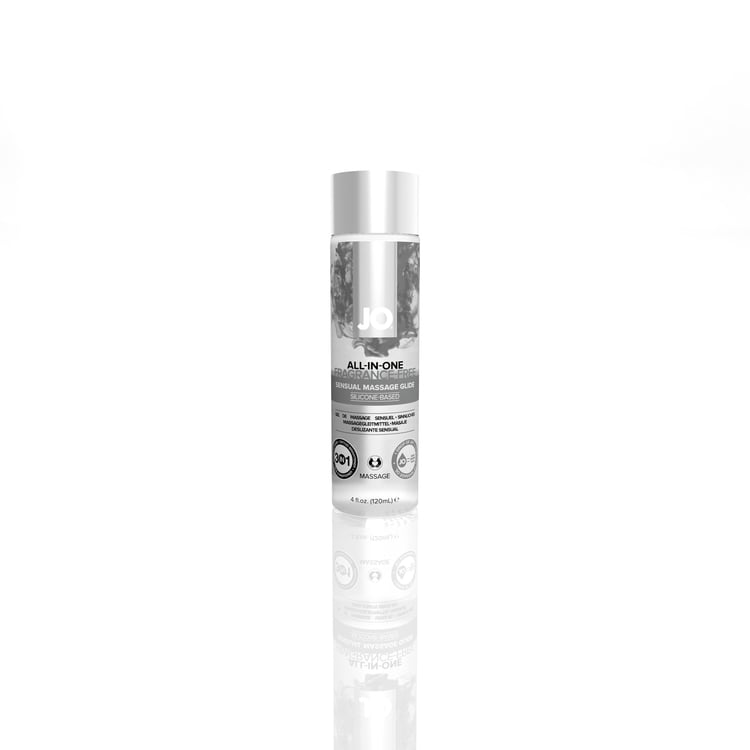
Choose silicone-based for a genuine full-body massage with no condoms and no silicone toys involved. Silicone does not absorb into skin, so one application lasts the whole session — by a wide margin the longest-lasting of the three.
Jo All-In-One Fragrance Free at $8.99 is fragrance-free, which matters if you or your partner react to scented products. The manufacturer also lists it as a skin conditioner and tattoo brightener.
The catch is the same one that applies to silicone lubricant generally: silicone glide and silicone toys are the same polymer family, and prolonged contact leaves the toy surface permanently tacky. Our lube compatibility guide and material care guide both cover this in more detail.
Who should choose an oil?
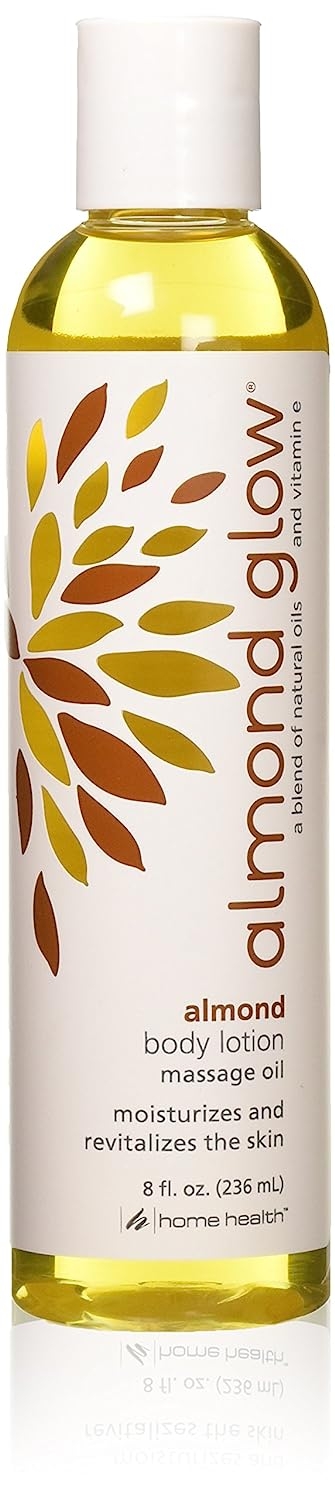
Choose an oil for a long massage where skin conditioning is the point and no latex is involved. Oils last, they feel richer than either glide, and they leave skin softer.
Almond Glow Body Lotion Massage Oil at $9.99 is an 8 oz bottle — much larger than the 1 oz glides, and better value for actual full-body massage.
Two warnings, and we would rather lead with them than bury them.
It contains peanut oil and lanolin. The blend is peanut, olive and lanolin oils with vitamin E. If either you or your partner has a nut allergy, do not use it, and check any oil blend's ingredients before it goes on skin. Lanolin is also a recognised contact allergen for some people.
Oil weakens latex. Mineral and vegetable oils degrade latex condoms and raise the chance of breakage. If there is any possibility of a latex condom being used, choose a different base.
Buying rule: patch-test any new oil blend on a small area of forearm before using it over a large area, and read the full ingredient list — not the marketing line on the front.
What about essential oils?
Essential oils are a different category, and they are routinely misused.
They are highly concentrated plant extracts and are not massage oils. Applied neat they can cause irritation and contact dermatitis. Published guidance puts typical safe dilution at roughly 2–5% in a carrier oil, dropping to around 0.5% for the more irritating oils.
Sensitisation is uncommon but real. In one patch-test series covering twelve essential oils across 10,930 dermatitis patients, 8.3% reacted to at least one, with ylang-ylang, lemongrass, jasmine, sandalwood, clove and neroli each producing reactions in more than 1%.
Aura Cacia Black Pepper Warming essential oil at $13.30 is a 0.5 fl oz bottle of pure essential oil. It is an ingredient to be blended into a carrier, not something to pour onto skin.
Practical rule: a few drops of essential oil into a tablespoon of carrier oil is roughly the right order of magnitude. If you cannot work out the dilution, use a ready-blended massage oil instead.
Where they are identical
- All three feel good. Nobody chooses badly on texture alone; the compatibility issues are what actually go wrong.
- All three stain something. Oils are worst, silicone is intermittent, water-based is mildest — but a towel is sensible for any of them.
- None is a substitute for reading the label. Whether a product is safe as a personal lubricant is a labelling question, not a base-type question.
- All three should be patch-tested if you have sensitive skin or a known allergy.
What we can't confirm
- We have not tested any of these products ourselves. Compatibility guidance follows from material chemistry and manufacturer labelling.
- Ingredient lists change without notice. Read the bottle you receive, especially for allergens.
- Not every massage product is validated as a lubricant. Where a manufacturer does not state internal use, we will not assume it.
- The essential-oil dilution range is general guidance, not a per-oil prescription. Individual oils vary and some require far greater dilution.
- Product availability in this category moves quickly. Prices and stock were verified on 14 August 2026.
When should you speak to a clinician?
Stop and seek advice if you notice:
- A rash, hives, burning or spreading redness after use
- Swelling, difficulty breathing or throat tightness — seek emergency care immediately, as this can indicate an allergic reaction
- Irritation that does not settle within a day or two of stopping
- Any reaction after using a product containing nut oils, if you have a known nut allergy
Patch-testing a new product on a small area first is the simplest way to avoid all of this.
Common myths
"Massage oil and lubricant are interchangeable." Sometimes, but only when the label says so. Formulation and testing differ.
"Natural oils are automatically safer." Peanut, almond and lanolin are all natural and all recognised allergens. Natural describes origin, not safety.
"Essential oils are just strong massage oils." They are concentrated extracts requiring dilution into a carrier before skin contact.
"Warming products are just scented oils." Warming agents are additional active ingredients and a common cause of irritation for people prone to it.
Frequently asked questions
Can I use massage oil with condoms?
Not with latex condoms. Oils weaken latex and raise breakage risk. Use a water-based or silicone-based product instead.
Can I use a silicone massage glide with silicone toys?
No. They are the same polymer family and prolonged contact permanently damages the toy surface. Use water-based.
What is the difference between a massage glide and a massage oil?
A glide is water- or silicone-based and usually doubles as a personal lubricant. An oil is a true oil blend — longer lasting and more conditioning, but incompatible with latex.
Do I need to dilute essential oils?
Yes. Published guidance is roughly 2–5% in a carrier oil, lower for irritating oils. Neat application can cause contact dermatitis.
Which massage product is safest for sensitive skin?
A fragrance-free water-based or silicone-based glide, patch-tested first. Fragrance and warming agents are the usual triggers.
Will these stain my sheets?
Oils frequently, silicone sometimes, water-based rarely. Use a towel regardless.
Can I use massage oil as a lubricant?
Only if the label states it. Many massage oils are not formulated or tested for that use.
Sources and further reading
- Mineral oil lubricants cause rapid deterioration of latex condoms
- The Influence of Carrier Oils on the Antimicrobial Activity and Cytotoxicity of Essential Oils
- Assessing the skin sensitization potential of essential oils
- Advances in plant essential oils and drug delivery systems for skincare
Related reading: our lube compatibility guide and material care guide.
About this guide
Written by the Gear Isle product team, West Sacramento, CA. Ingredients, prices and availability were verified against our catalogue on 14 August 2026 and are subject to change. Always read the ingredient list on the bottle you receive.
This article is for general information and is not medical advice. If you have a known allergy — particularly a nut allergy — check ingredients before use and consult a healthcare provider about any reaction. Seek emergency care for swelling or difficulty breathing.


